
Can You Sleep Better Without Alcohol?
Last Updated: October 25, 2026
Quick Summary
You can sleep better without alcohol by giving your body one to two weeks to reset, since most people notice real improvement within that window. Expect the first few nights to be worse, not better, as your nervous system relearns how to fall asleep without a sedative.
Alcohol may help you fall asleep faster but is linked to less time in deep sleep.
A Sleep Foundation survey found 61% of respondents slept better after taking a break from drinking.
Keep your wake time fixed, even on weekends, as the strongest anchor for your body clock.
Breathe in for four, hold for four, out for six, and repeat for five minutes.
If you drink heavily and stop suddenly, talk to a doctor first because withdrawal can be serious.
Table of Contents
Why Alcohol Wrecks Your Sleep Even When It Knocks You Out
The Nightcap Trap: Falling Asleep Fast, Sleeping Poorly
What Happens to REM and Deep Sleep After a Drink
How Long for Sleep to Improve After Quitting Alcohol
Track It Simply, So You Stop Guessing
Ways to Relax Without Alcohol Before Bed
Slow Breathing: The Fastest Lever You Have
Evidence-Based Unwinding, Not Just Vibes
Swap the Drink, Keep the Ritual
Build an Evening Routine for Better Sleep
Sleep Hygiene Tips That Actually Move the Needle
What to Do When Sleep Still Does Not Improve
Book a Confidential Call to Sleep Better Without Alcohol
Frequently Asked Questions
Why Alcohol Wrecks Your Sleep Even When It Knocks You Out
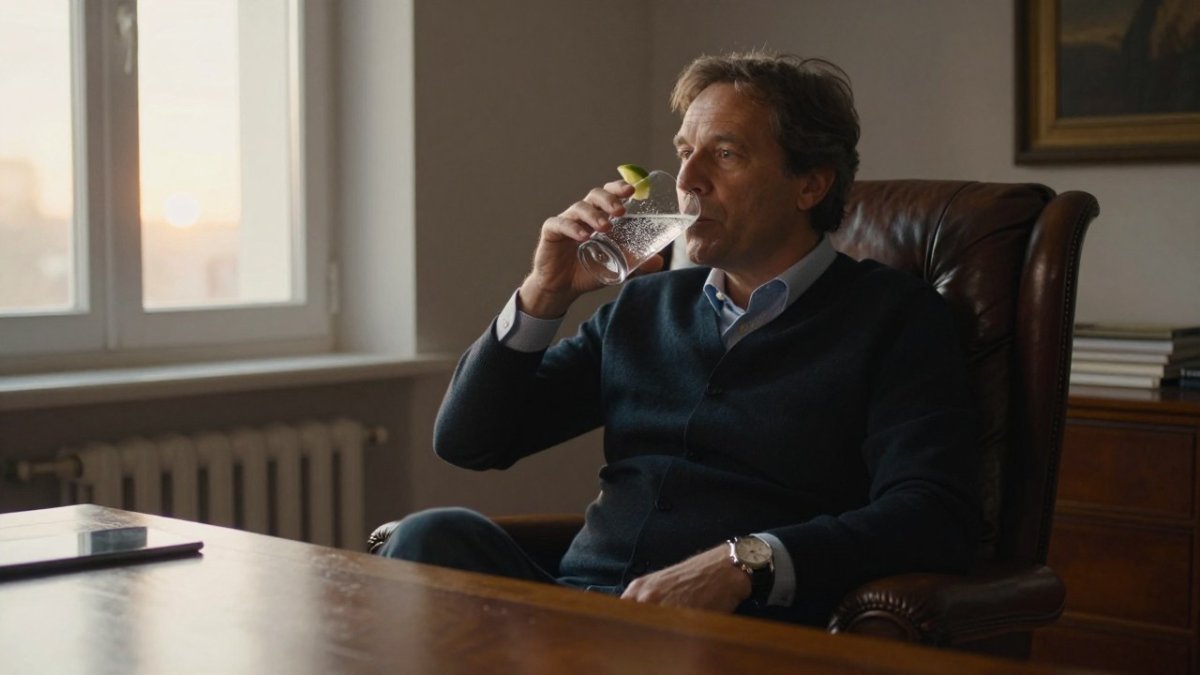
It's 9 p.m. You're finally off the calls, the house is quiet, and you pour a glass of wine to take the edge off. Twenty minutes later you're drowsy.
If that sounds familiar, you're not imagining it. Learning how to sleep better without alcohol starts with understanding one uncomfortable fact: that nightcap is borrowing sleep from tomorrow, not creating it.
At Simon Luthi, I work with senior leaders who run on this exact cycle. They fall asleep quickly, then wake at 3 a.m. and wonder why.
The Nightcap Trap: Falling Asleep Fast, Sleeping Poorly
Alcohol is a sedative. It slows your brain down, which is why the first drink feels like permission to finally relax. That's sleep onset, the moment you drop off. It is not the same as sleep quality.
Alcohol Change UK's guidance on alcohol and sleep puts it plainly: drinking may help you get to sleep, but it is linked to less time in deep sleep.
Ask yourself one honest question: do you wake up feeling rested, or do you wake up needing the day to start slowly?
What Happens to REM and Deep Sleep After a Drink
Your sleep runs in cycles, roughly 90 minutes each, moving through light sleep, deep sleep, and REM sleep. Deep sleep repairs your body. REM sleep helps your memory and mood.
Alcohol disrupts that architecture. It can pull you into deep sleep early, then push you into lighter, fragmented sleep in the second half of the night. That's why the 3 a.m. wake-up is so common after drinking.
The result: restless sleep, more nighttime waking, and a morning that feels like a hangover even after two drinks.
How Long for Sleep to Improve After Quitting Alcohol
It's 2:40 a.m. on a Tuesday. You cut out the wine four nights ago, you're still staring at the ceiling, and a small voice says, "See? It's not working." That voice is wrong, but it's loud.
Most people notice real sleep improvement within the first one to two weeks of cutting back. The first few nights are often worse, not better. Your body has to relearn how to fall asleep without a sedative doing the work for it.
Brown University's 2026 report on a month without alcohol found that people who abstained for a month reported improved sleep, better mood, weight loss, and healthier liver function. A Sleep Foundation survey on alcohol breaks and sleep found that 61% of respondents said they slept better when they took a break from drinking.
Here's the week-by-week picture, with what to actually do at each stage:
Phase | What You May Feel | What's Happening | What to Do |
Nights 1-3 | Restless, hard to fall asleep, maybe sweaty | Your nervous system is recalibrating without the sedative | Keep your wake time fixed. Get outside in morning light. Don't chase sleep with naps over 20 minutes |
Week 1-2 | Waking less, deeper stretches of sleep | Sleep cycles start to reset | Hold the same bedtime. Keep the bedroom cool and dark. Skip late caffeine |
Week 3-4 | Steadier energy, clearer mornings | Sleep recovery takes hold | Add one calming pre-bed ritual and keep it boring and repeatable |
Month 2+ | Consistent, restorative sleep | New baseline established | Protect the routine on travel weeks and high-stress weeks, when old habits creep back |
The first stretch is the hard part. Expect some restlessness. It passes. If you're a heavy or daily drinker, talk to a doctor before you stop suddenly, because withdrawal can be serious and some symptoms need medical help.
Track It Simply, So You Stop Guessing
Wearable sleep scores are noisy. They can make you anxious about a number that isn't the whole story. A simple paper sleep diary tells you more, and it takes 30 seconds.
Each morning, write down four things:
Roughly what time you fell asleep and woke up
How many times you woke in the night
How alert you felt by mid-morning, on a 1 to 5 scale
Whether you drank the night before, and roughly how much
After two or three weeks, look for the trend, not any single night. Are your mid-morning alertness scores creeping up? Are the 3 a.m. wake-ups getting rarer? That's the signal that matters.
Ways to Relax Without Alcohol Before Bed
It's 6:45 p.m. You close the laptop, and your hand is already reaching for the cabinet before your brain has caught up. That reach isn't a character flaw. It's a learned cue: end of work equals drink.
The Rocket Shaman Leadership Academy
Your nervous system needs a signal that the day is over. A drink has been filling that role. Here's how to replace it with something that actually works.
Slow Breathing: The Fastest Lever You Have
Slow breathing is the most reliable tool I know for shifting out of work mode, and it's free. The mechanism is simple: slow, steady breaths nudge your nervous system toward the calm, rest-and-digest side and away from the alert, on-call side.
Try this. Breathe in through your nose for a count of four. Hold for four. Breathe out for six. Repeat for five minutes. The longer exhale is the part that does the work.
Evidence-Based Unwinding, Not Just Vibes
Most relaxation lists are a grab bag. These are the ones with real backing behind them:
A cool, dark, quiet bedroom. Your body needs to drop its core temperature to sleep. A warm bath about an hour before bed can help, because the heat you shed afterward is what cools you down.
A consistent wake time, seven days a week. This is the single strongest anchor for your body clock. Pick a time and defend it, even on weekends.
Get bright light in the morning. Ten to twenty minutes of outdoor light soon after waking helps set the clock that governs when you get sleepy at night.
Keep the bed for sleep. If you're wide awake for more than about twenty minutes, get up, go to another room, and do something quiet in dim light until you're drowsy. This is a core piece of cognitive behavioral therapy for insomnia, or CBT-I.
Park the day before bed. Write down tomorrow's top three priorities and any open loops. Getting them on paper tells your brain it can stop rehearsing them at 3 a.m.
Swap the Drink, Keep the Ritual
The ritual matters as much as the liquid. Keep the glass, keep the time, keep the wind-down. Just change what's in it.
A non-alcoholic beer or a spirit-free cocktail in the same glass you usually use
Warm herbal tea, or warm water with lemon
Sparkling water with a slice of lime
A small bowl of something warm and simple, if the drink was really about comfort
If work stress is the real trigger, that's worth naming out loud. For a deeper guide on breaking the cycle of drinking after work stress, read how to stop drinking after work stress.
Ask yourself one honest question: when you reach for the drink at 6:45, is it the alcohol you want, or is it the signal that the workday is finally over?
Build an Evening Routine for Better Sleep
An evening routine for better sleep works because it removes decisions. When you're tired and stressed, you default to old habits. A routine gives you a script.

Here's a simple one to start with:
Set a cutoff time for work and email.
Dim the lights an hour before bed.
Swap the drink for a warm, alcohol-free beverage.
Do one calming thing: read, stretch, or breathe.
Keep the same bedtime, even on weekends.
A consistent sleep schedule matters more than most people think. Your body clocks off routine.
Part of this is managing the work stress that spills into your evenings. For a deeper guide, read how to manage work stress triggers.
Sleep Hygiene Tips That Actually Move the Needle
Sleep hygiene tips only help if you pick the ones that matter. Most lists are too long. These are the ones that change how you sleep.
Cool bedroom: Keep it cool. Your body needs to drop its temperature to sleep.
Dark bedroom: Block the light. Even small amounts can disrupt sleep.
Quiet bedroom: Cut the noise, or use a fan for steady sound.
No screens in bed: The light and the scrolling keep your brain alert.
Same wake time daily: Anchor your morning, and your night follows.
None of this is exotic. The difference is doing it consistently while your sleep recovers from alcohol.
What to Do When Sleep Still Does Not Improve
If your sleep hasn't improved after a few weeks of cutting back, that's a signal, not a failure.
Watch out: if you drink heavily and stop suddenly, you can have withdrawal symptoms. Some can be serious.
For most executives, the bigger issue is that willpower alone doesn't stick. You've tried rules. You've tried cutting back on your own.
That's where private support helps. If you want confidential, non-rehab options for getting support, read confidential alternatives to rehab for executives.
Book a Confidential Call to Sleep Better Without Alcohol
You don't need a label to want better sleep. You need a plan that fits your life, your schedule, and your career.
This is what I do at Simon Luthi. My private 12-month coaching program is a modern alternative to AA: private, practical, and built around your work.
If you want to know what the program involves before you commit, read private alcohol coaching for executives. When you're ready, here's how to book a private alcohol management coaching session, step by step.
You can sleep through the night again. You can have clearer mornings and calmer meetings. Get started with Simon Luthi and book a confidential call to take back control, privately.
Frequently Asked Questions
How long does it take for sleep to improve after stopping alcohol?
Most people notice a difference within the first two to four weeks, though it varies. A month-long break is a useful benchmark: Brown University reported in 2026 that participants who abstained for a month reported improved sleep, better mood, weight loss, and healthier liver function. The first few nights can be restless as your body adjusts. Give it at least a week before judging, and track your nights so you can see the trend rather than one bad night.
Why does alcohol make it harder to sleep well even if I fall asleep fast?
Alcohol can make you feel sleepy and help you fall asleep, but that does not mean the sleep is restful. Alcohol Change UK notes that drinking may help with sleep onset while reducing time spent in deep sleep. The result is fragmented sleep, more nighttime waking, and less restorative rest. You may wake at 3 a.m. feeling wired. That gap between falling asleep fast and sleeping well is the core problem with using a nightcap.
What can I do to relax before bed without drinking?
Try a hot bath, gentle stretching, or soothing music an hour before bed. Keep the lights low and put your phone away. A warm alcohol-free drink can replace the ritual of a nightcap. The goal is to signal to your nervous system that the day is done. Pick one or two things you will actually repeat, and do them at the same time each night so the routine becomes automatic.
What should I do if I wake up during the night?
Keep the room cool, dark, and quiet, and avoid checking your phone or the clock. If you are awake for more than 20 minutes, get up and do something calm in low light until you feel sleepy again. Write down whatever is on your mind so you are not rehearsing it in bed. If nighttime waking continues for weeks after you cut back, look at your evening routine and talk to a professional about next steps.
Book a Free Discovery Call
Add simonluthi.com as a preferred source on Google →


Comments